

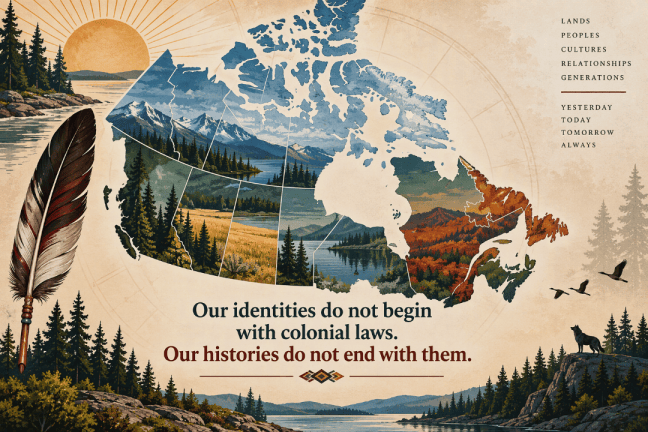
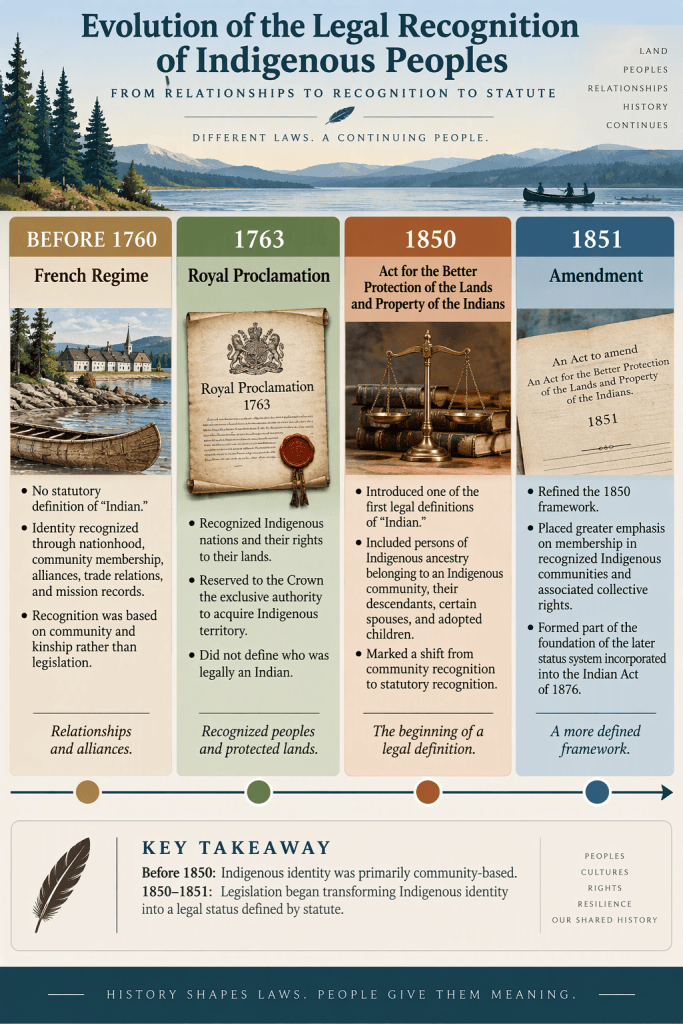
Colonial laws gradually transformed Indigenous identity from a matter of community, kinship, and nationhood into a legal status defined by the state. This history reminds us that decolonization cannot be achieved simply by replacing one colonial benchmark with another.
The central question is not whether an individual appears in a particular nineteenth-century government record, but whether the historical evidence demonstrates continuity within an Indigenous People whose existence predates colonial legislation.
In that sense, decolonization means moving away from exclusive reliance on colonial definitions and restoring greater weight to Indigenous community recognition, kinship networks, and historical continuity.
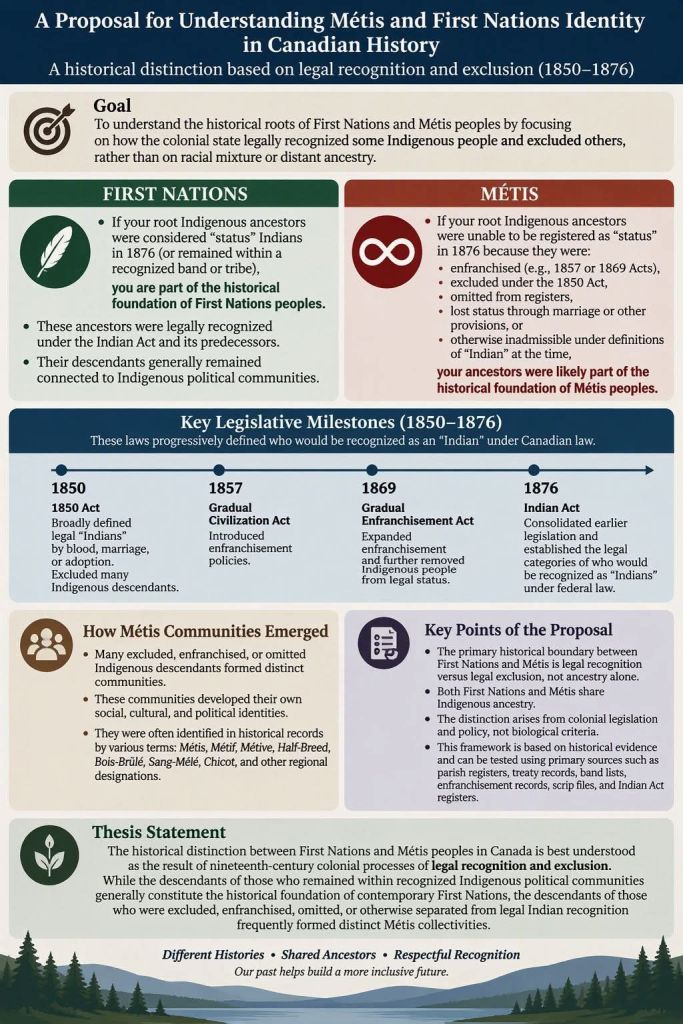
The historical distinction between First Nations and Métis Peoples in Canada is best understood as the product of colonial processes of legal recognition and exclusion rather than differences in Indigenous ancestry.
While First Nations generally descend from Indigenous populations that remained within Crown-recognized political communities, Métis communities emerged largely from descendants of Indigenous peoples who were excluded, enfranchised, omitted, or otherwise separated from legal Indian recognition under the legislative framework established between 1850 and 1876.
By the late nineteenth century, Canadian governments increasingly separated Indigenous Peoples into distinct legal categories governed by different laws and administrative systems.
These policies did more than classify Indigenous peoples. They actively discouraged political reunification and the reassertion of broader Indigenous relationships that predated Confederation. By assigning different rights, obligations, and forms of recognition to different Indigenous populations, the state fragmented communities that had long been connected through kinship, mobility, trade, and alliance.
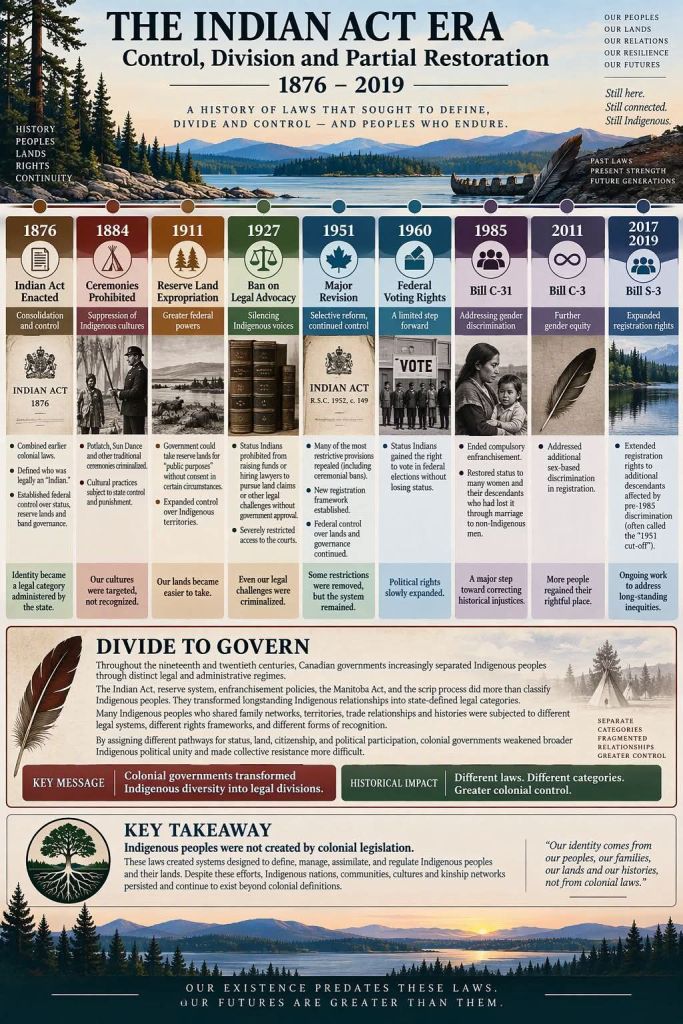
DIVIDE, CLASSIFY, GOVERN
Beyond the Law
The history presented here demonstrates that colonial legislation did far more than regulate Indigenous peoples. It created systems designed to define identity, control lands, restrict cultural expression, limit political action, and separate Indigenous peoples into distinct legal categories.
Yet these laws never succeeded in what many of them were intended to accomplish.
Indigenous Nations, communities, families, cultures, and kinship networks endured. They existed before the Indian Act, before the Manitoba Act, before scrip, and before the colonial governments that sought to regulate them. Their continuity remains one of the clearest demonstration that Indigenous identity is rooted not in legislation, but in relationships, community, history, and nationhood.
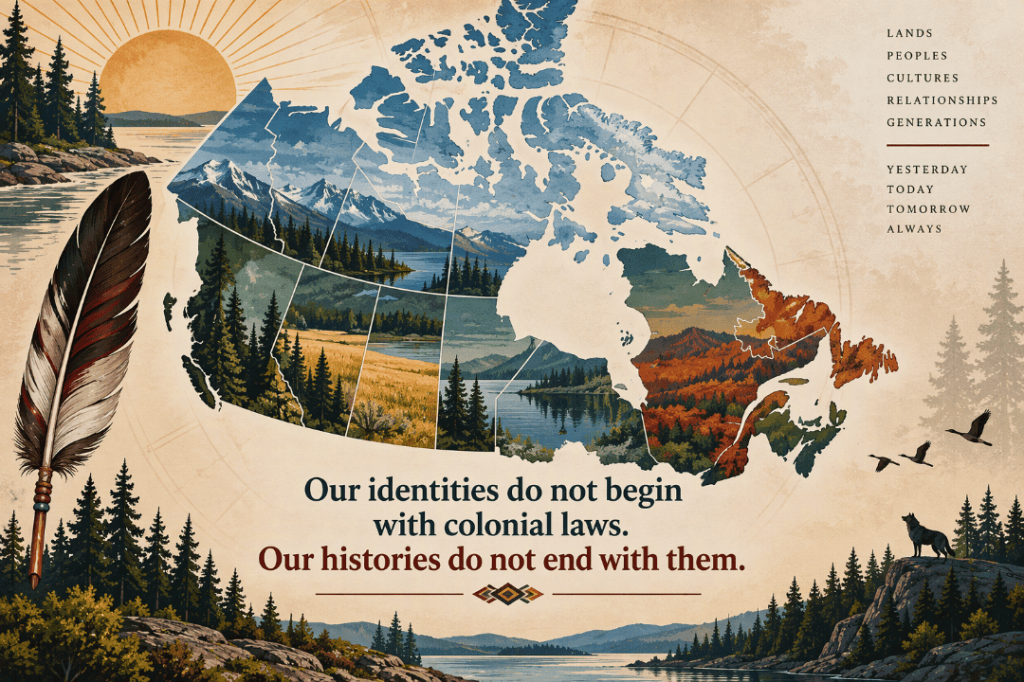
Understanding this history requires more than learning the chronology of legislation. It requires questioning the assumptions that these laws were entitled to define who Indigenous Peoples are.
As we continue to move toward reconciliation and decolonization, we must look beyond colonial registries, classifications, and categories, and recognize the enduring realities of Indigenous Peoples themselves.

