#Métis Organizations in Canada

I have been writing a few posts now about my thoughts as I delve into issues surrounding Métis Identity. There are so many regional groups who claim to represent us, I decided to jot down a brief overview I made for myself when researching whether it was worth joining any association and which ones were legitimate.

First, I encourage anyone who self-identifies as Métis to do their own research to see which group best represents their interests. FOREMOST, make sure that the organization is *legitimate*. If they do not require extensive genealogical proof, they likely are not. Which, I surmise, will mean that the entire organization and its members would be at risk of not being recognized, nor would they be accepted into larger associations…

This list may not be complete; there are many, many groups popping up and there is no index.

Two associations represent “Federal” interests. That was my starting point, mainly because my understanding is that “Métis are within federal jurisdiction because they come within the definition of “Indians” in s. 91(24) of the Constitution Act, 1867″ 

The Métis Federation of Canada

The MFC’s vision is to represent all Métis from all regions of Canada (and the US). They are a recent arrival in the landscape and is rapidly growing. They have already signed several Unity Treaties with regional groups, which includes:

Communauté Wik Wam Oté (New Brunswick)

L’Association de Métis-Acadiens Souriquois (Nova Scotia)

Unama’ki Voyageurs Metis  (Nova Scotia)

Communauté Métis Autochtone de Maniwaki (Quebec)

L’ Association Métis Côte-Nord – Communauté de Mingan (Québec)

French River Métis Tribe (Ontario)

Voyageur Métis (Ontario)

The MFC has recently been granted leave to intervene in the Daniels case

You can apply for Membership directly to the MFC by clicking this link.

The MFC is the group I decided to join. That’s my disclaimer, right there. I joined them because their philosophy corresponds to mine.

The Métis National Council

The MNC represents what they consider as

historic Métis Nation Homeland,” which includes the 3 Prairie Provinces and extends into parts of Ontario, British Columbia, the Northwest Territories and the northern United States.

They require that member’s ancestry links back to what they consider as a historic Métis Nation community, as mentioned above. 

You must apply for Membership (which they refer as Citizenship) through the MNC Governing Member in the province in which you reside. Each Registry has its own application forms and application process. I have been told that the various application processes may exclude Métis who do not reside in the same province or historical community as where their ancestors originated. 

The MNC Governing Member by province are as follows. You can click on each link representing the provincial association:

Métis Nation of Ontario                  Manitoba Métis Fédération

Métis Nation Saskatchewan **       Métis Nation of Alberta 

Métis Nation British Columbia 

Other noteworthy Associations not currently associated with the two “Federal” ones:

BC Métis Federation – Their Métis Coffee Talk, a weekly webbroadcast every Thursdays, 7:30 pst and available on-demand. Very interesting topics every week!

**Communicating with the association may be difficult, due to current issues not yet resolved.

So good luck in your search for the association that will best represent YOUR beliefs! 
Le Québec: un cas du succès de l’effort d’Assimilation?

En février dernier, Gérard Bouchard – Historien et Sociologue grandement respecté, écrivait un article publié dans “La Presse”, Le faux «sang indien» des Québécois. Dans cet ouvrage, monsieur Bouchard critique le film L’Empreinte et prononce que la théorie du métissage intensif s’accorde mal avec les faits. 

Ah bon.

Son récit rappelle l’introduction du Blood Quantum Law des Colonies Britanniques au début du 18e siècle. La Colonie de Virginie fût la première tentative concrète d’assimilation du people Autochtone basée sur l’apport sanguin. 

Tuer l’Indien, Sauver l’Enfant.

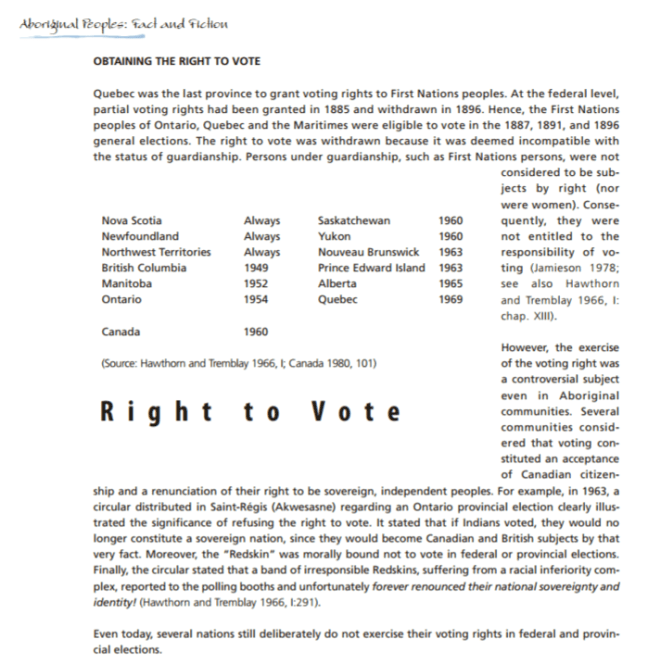
Rarement parle-t’on des Premières Nations, Inuit et Métis au Québec. On est tellement gardés sous silence qu’un mouvement nationaliste Métis des Prairies se propose l’exclusivité ethnique. Ces gens, Sociologues comme Gérard Bouchard, se sont imisciés dans les plus grands centres Universitaires canadiens. Ils prolètisent une version ethnocentrique des Métis. Tout comme Bouchard, leur narrative sert à assimiler toutes personnes de sang mixte venant de l’extérieur du centre sacrosaint de la Rivière Rouge.

Ils ont beaucoup à gagner. Nous risquons tout perdre. Le dernier souffle du Métis québécois? Ils ont travaillé bien fort en introduisant des lois, en utilisant la force et, comme monsieur Bouchard, le mépris. Ces tentatives en ont taits beaucoup, mais certains subsistent. On se sent isolés de nos cousins Autochtones, mais encore plus de nos cousins de l’Ouest: les Dubois, Beaugrand, Champagne, et j’en passe… Les descendants de nos ancêtres communs, plusieurs étant déjà Métis avant d’entreprendre leur long voyage vers le territoire du bison, nous renient, ayant comme peur une dilution de notre nouvellement gagné statut Autochtone…

Devons-nous rester silencieux? Y a-t-il une place pour nous, Métis Québécois, à la grande table?

Why is Métis ethnocentrism even happening?

I’m still having a hard time figuring this out.

It’s expected that Sociologists are interested in the study of the origins and organization of societies. Right. But how is it that some Sociologists are so biaised and unequivocal in repudiating the existence of Métis outside of the Red River area?

I can’t wrap my brain around the fact that Indigenous persons, or that ANYONE would actively lobby to abrogate someone else’s heritage – except maybe 19th Century Colonizers, AMIRITE???

Their reasoning is as appaling as those long dead politicians. The fear is that if too many people claim themselves as Métis, then they would outnumber First Nations and Inuit COMBINED. Woah.

Listen, I’m not gonna justify Settlers who will just pull out or even invent some long lost Indigenous relative – it’s hip, or whatever – Blech. That being said, either those scholars have used faulty ethnogenesis or had a biais. Either way, NOT COOL.

ANYWAYS…

Am I the only one that’s wondering if the fear is diluting the Indigenous collective, or that Indigenous persons could possibly become over represented in future Census reports, forcing the redirection of resources and government programs?

I don’t know. It sounds crazy. But so does the lack of clean water and housing and the outrageous food insecurity in some Indigenous communities.

Either way, that narrative is being advocated in our Universities. Kind of like the rhetorics of ole Macdonald’s days.

Metis / Mixed. Some tell me that there’s a difference.

A while ago, I began to follow this really dynamic Indigenous blogger who has a legal degree and works with Inuit here in Montreal. I was really impressed – (and still am!) at how well spoken she was, and admire her Advocacy. She had an online book discussion. Métis, by Chris Andersen, UBC Press (ISBN: 9780774827218) was the book reviewed. I was very interested.

Chris Andersen argues that Canada got it wrong. He weaves together personal anecdotes, critical race theory, and discussions of history and law to demonstrates that our understanding of “Métis” – that our very preoccupation with mixedness – is not natural but stems from more than 150 years of sustained labour on the part of the state, scholars, and indigenous organizations. From its roots deep in the colonial past, the idea of “Métis as mixed” pervaded the Canadian consciousness through powerful sites of knowledge production such as the census and courts until it settled in the realm of common sense. In the process, “Métis” has become an ever-widening racial category rather than the identity of an indigenous people with a shared sense of history and culture centred on the fur trade.

Andersen asks all Canadians to consider the consequences of adopting a definition of “Métis” that makes it nearly impossible for the Métis Nation to make political claims as a people. (Source: http://www.ubcpress.com/search/title_book.asp?BookID=299174387)

I jumped right in. I wanted to learn more about challenges facing Métis and the description was exactly where I thought I should start and I looked forward to connecting with Métis from everywhere.

As I read through this very scholarly book, I began to realize that its author, a Faculty of Native Studies Professor at the University of Alberta, was actually presenting his seemingly well researched opinion that Métis are members of a Nation exclusive to the Northwest parts of Canada (more specifically Manitoba and Saskatchewan) and that all other persons that came to be through the relationships between fur traders and Indigenous persons were not Métis, but mixed-blood persons. Maybe Indigenous, maybe not.

BlahBlahBlah…WUT???

That was a first for me.  I always knew that I was Métis – I’ve never questioned that. What was he talking about? I left the discussion group. I felt very disenfranchised and really, really confused.

I started inquiring to try to find out if this was a common theory amongst a circle of Sociologists that teach in Faculties of Indigenous Studies across the country.

I have had discussions on Twitter or Facebook with a few of them, including Dr. Andersen. Their narrative reminds me very much of the narratives of Quebec Sovereignists that assert – erroneously – that all Francophones are in Quebec. Yeah, people here in La Belle Province are always so shocked to learn that there are strong Francophone communities in places far, far away in Canadaland! 

I hate this narrative. I find the narrative very Colonialist. These scholars are actively promoting an argument of exclusivity necessary to make political claims as a people, excluding others that have self-identified as Métis (or Michif or Bois-Brûlé or Half-Breed). I’m not cool with that.

My great-grandmother identified as Métis. She was born in 1882, and died in 1981. I got to know her, speak to her, listen to her. I have to write a post just about her life. It was very interesting.

Anyways… SHE IDENTIFIED AS MÉTIS. Not the Government. Her. Her family. Me. If you haven’t already, please take a moment to read my last post. I used Spotify to show the a recap of a discussion on the “rights to claim Métis identity” I had with Adam Gaudry, who’s an Assistant-Prof in Native Studies at USask. It’s a doozy, I promise you. Read how a young man who didn’t know he was Métis when he was growing up (see the Acknowledgement section of his 2009 thesis) tell me “if you have Indigenous ancestry, it’s with Indigenous peoples in Quebec, not with us.”

This guy is standing on a podium, spewing this rhetoric to Indigenous Studies University Students. 

Denying my ethnicity. NOT COOL.

Why is “who I am” important now?

Also a complicated question. Did I mention that I was almost at the half-century mark?

Over the last 3 or 4 years, my father became more interested about the focus of my genealogy research. We began talking about who we were and he talked quite a bit about his early life and he started helping me with my genealogy research (my favorite Winter pastime).

His uncle had devoted the early years of his life recording the names and collecting information of our male ancestors. The family tree was pretty complete. Except that the women were almost footnotes!

I’m certainly not going to place blame here. I love my great-uncle dearly and at almost 97 years old young, I have only great admiration for this virtuous man!

My goal in building our family tree was to focus on my female ancestors and develop and highlight their existence.

Anyways…

We never questioned our Métis identity. Whether it was through my dad’s talks with his grandmother about the “cousins” Dubois, Beaugrand-Champagne and others that settled West, or having met my grandfather’s cousins from Odanak and Manawan. We just were.

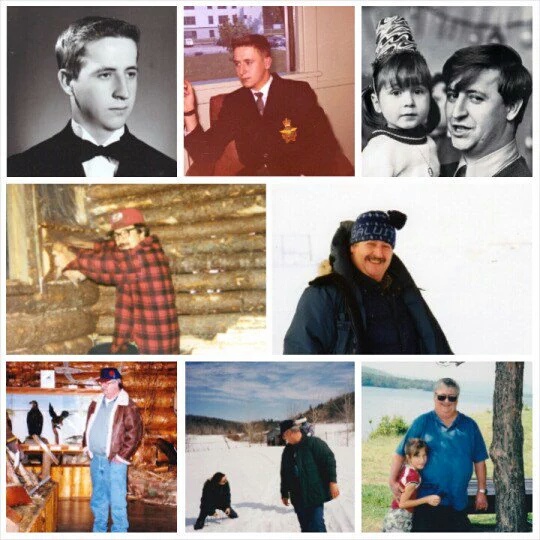
Then my dad passed away, very suddenly. It was a year ago today.

image