

How the Indian Act of 1867 determined who was Indigenous
Why is “who I am” important now?
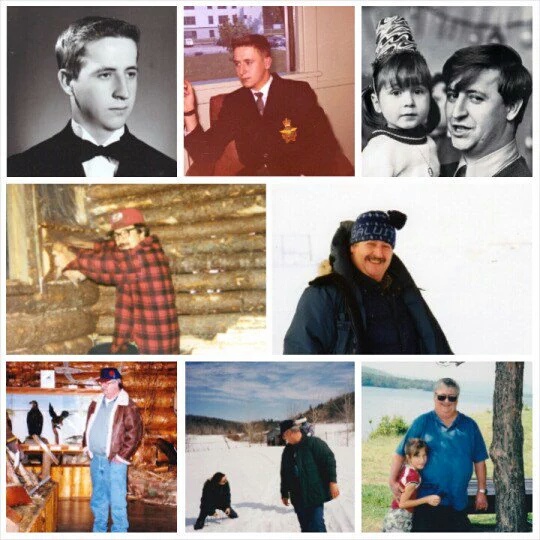
Also a complicated question. Did I mention that I was almost at the half-century mark?
Over the last 3 or 4 years, my father became more interested about the focus of my genealogy research. We began talking about who we were and he talked quite a bit about his early life and he started helping me with my genealogy research (my favorite Winter pastime).
His uncle had devoted the early years of his life recording the names and collecting information of our male ancestors. The family tree was pretty complete. Except that the women were almost footnotes!
I’m certainly not going to place blame here. I love my great-uncle dearly and at almost 97 years old young, I have only great admiration for this virtuous man!
My goal in building our family tree was to focus on my female ancestors and develop and highlight their existence.
Anyways…
We never questioned our Métis identity. Whether it was through my dad’s talks with his grandmother about the “cousins” Dubois, Beaugrand-Champagne and others that settled West, or having met my grandfather’s cousins from Odanak and Manawan. We just were.
Then my dad passed away, very suddenly. It was a year ago today.

Métis with a capital “M”
I identify as Métis from Québec or Kébec*. Not métis. Here’s why:
The same reason why I go back and correct Indigenous, Aboriginal, Inuit, First Nations, Atikamekw, Abenaki, etc…
The same reason why we write Canada, Quebec, Canadian, Peter, Marie…
Who I am is not an adjective, it is a Proper Noun – there’s nothing common about me!
Adjective: I am the product of métissage. Proper noun: I am Métis.
*Algonquian ”Where the river narrows”
What I’m reading
Québec counts 11 Indigenous Nations and 54 Indigenous Communities
Who am I? (part deux)
In my previous post, I showed you where I was born. I am definitely a product of my geography. Here’s why:
For 365+ years, my French Colonial Settler ancestors stole shared (maybe?) land along the shores of the Saint-Lawrence River with several Indigenous Nations. In my family, they intermarried. They mixed. A lot. I’m not sure why, I wasn’t there at the time. They still do!
I hate some of the narratives of conquest and theft of the Indigenous women. I’d rather not think too much that I may be the product of forceful coupling and the other horrors Settlers have done to Indigenous People. The sum of my parts is appalled by it.
I’m so privileged to have known my Mémères (great-grandmothers).Neither of them had ever uttered any unkind words about their spouses who were, like them, the product of métissage.
I am the only child of the first-born son. I was very close to my grandparents. My grandfather dragged me along. Everywhere. He farmed. He hunted. He gathered. He harvested. He had a couple of trap lines. He logged. He raised horses. I was there for it and they remain some of my most prized memories of my early childhood. I think I will share some of those memories in future posts!
Who am I?
Well, it depends on who you ask. It’s really complicated, and I’m working my way through that question with this blog. Let’s start with “Where am I from” instead.
I was born in Québec. My mother was an “Air Force Brat”. who grew up in pretty much every AF base throughout Canada. Her parents, my grandmother and grandfather, were born respectively in Grey County, Ontario and Lanaudière, Québec. They met and married while both serving in the RCAF during WWII.
My dad was born in Lanaudière and we trace his part of family back to the first French colonialists to settle in the Mauricie region of la Nouvelle-France.
Time for a map. It’s important.

Mauricie and Lanaudière are narrow, long stretched Northward territories administrative regions.. For a long time, the area that would later become known as Trois-Rivières was frequented by Algonquins and Abenakis, who used it as a summer stopping place. The pin is dropped at Odanak, the only First Nation reserve West of Trois-Rivières and East of Kahnawà:ke. The “lighter” shade of green are cultivated lands. The “darker” shade are forests. This is where my paternal ancestors lived. Notice at the top the “Réserve faunique” and the “Parc national”. Those were our harvesting grounds.
A brief Introduction
Powley. That’s what started it all.
One name. Two guys in Sault Ste. Marie, Ontario.
Other than their name, I really don’t know much about them or the details about their case that’s been kicked up and down the Canadian Courts. To be honest and I’m ashamed now, I really didn’t have much interest about it back in 1993 when the events started. I was just living my life, impervious to what many now call as “the first major Aboriginal rights case concerning Métis peoples”
My dad though. He followed the story from the beginning. I can’t say why it interested him, but I suppose that it was because he was also a hunter, and also hunted on lands harvested by our ancestors for centuries. With all the permits, permissions, tags, and whatever else goverments had implemented over the years. Did he ever questioned it? I don’t know.
Originally, he might have been interested in actions taken by “kin” – cousins we knew from our genealogy and family narratives, had traveled West throughout the years. Some settled in Ontario, others pushed farther West across our vast country and parts now known as the United States. They intermarried with other Nations to create the vast patchwork of Métis of today.
Hi / Salut / Ain / Kwei / Bounjour!
That’s a lot of ways to greet you welcome, and here is why:
English: the first language I learned and, I expect, the one I will most likely (but not exclusively) write down my impressions here.
French: my first language of instruction (thanks Bill 22), my French ancestry and the official language of Québec,
Inuktitut: the language of Qiqiqtaaluk Inuit, where I spent my formative years and what I consider the most important time of my life,
Kwei (also Kway, Kwe): in recognition of my Attignawantan (Huron-Wendat), Abenaki and Atikamekw ancestry,
Michif: also Joual, the reason why I’m starting this blog.
I do so to in recognition of all the parts that make the sum of me, and because it directly links to the reason of this blog.
I’m neither a writer nor a scholar – so please forgive me if this isn’t perfectly formatted or doesn’t have proper Introduction, methods and discussion and conclusion! As I’m quickly approaching the half-century mark, I wanted a space to write down some of my narrative and the questions I have as I attempt to reclaim my Indigenous identity.
 Les écrits d'une ♾Abitawiskwe♾ and her writings