Louis Durand’s Travels

My direct ancestor, Louis.

He came from a long line of Métis. From East to West, uniting Indigenous Peoples.

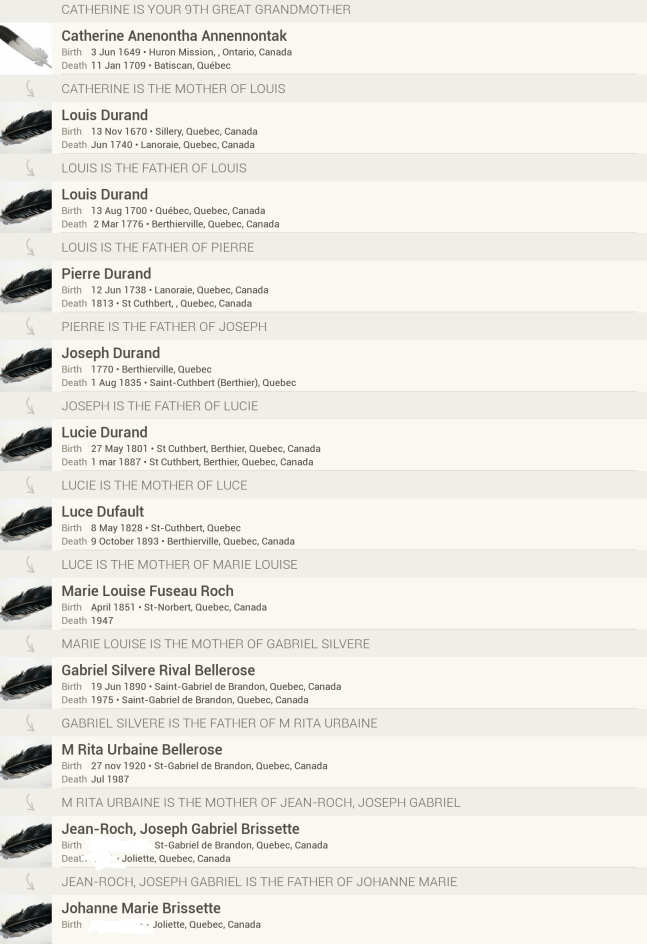
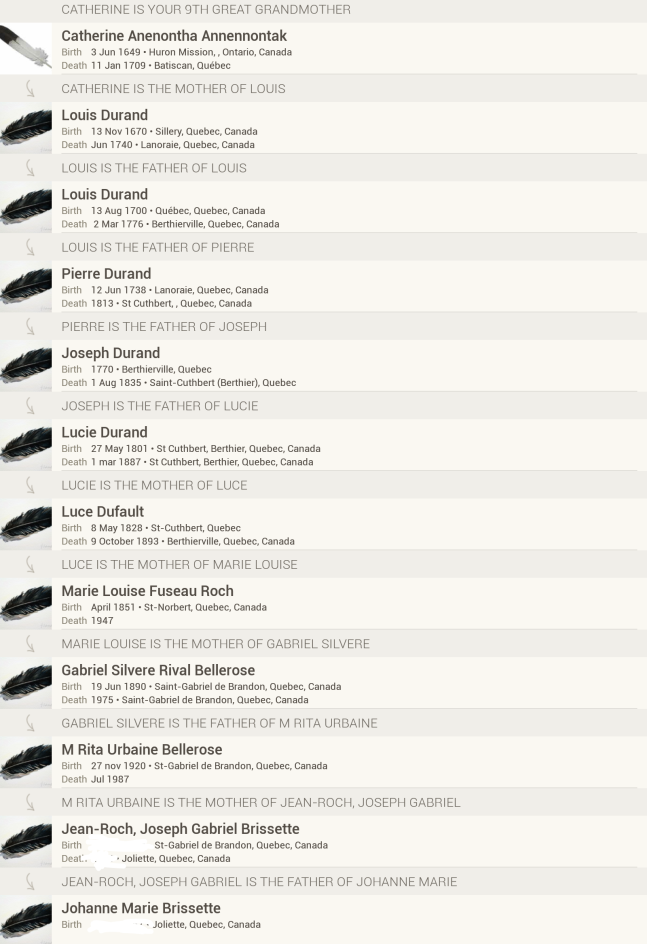
From the union of our earlier ancestor, French Settler Jean (1636-1671) and Catherine Anenonta (1649-1709), Attignawantan – People of the Bear, comes a long line of Métis.

For over 100 years, each generation explored the waterways West of  Kahnawáʼkye – Big Waterway.

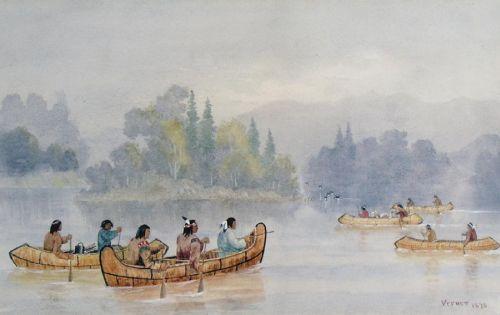
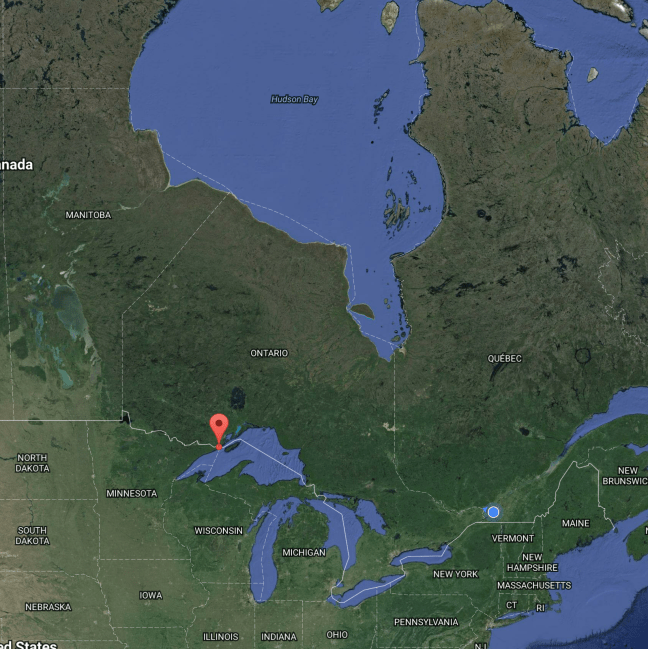
Born in Berthier in Lanaudière, Louis, like his father, grandfather and great-grandfather before him, traveled to and from the Western part of Gichi gumi – Lake Superior.

In the 1784 to 1801, Louis took three contracts with McTavish Frobisher & Co. – which later became the North West Company. to Gichi-onigamiing – Grand Portage.


Studio_20160316_233152

In 1803, he would take contract to travel further West to Gojiji-zaaga’iganLac à la Pluie

Studio_20160316_233351


In a book by Joachim Fromhold titled: Pakisimotan Wi Iniwak – The Western Cree, a written history of Jacques Cardinal – one of the first of the famed Mountain Men of the West, we find several passages referring to Louis.

It appears from these memoirs that Louis traveled to Iyaghchi Eennu Sipi Lesser Slave River and Atikameg – Tête-Blanche – Whitefish:

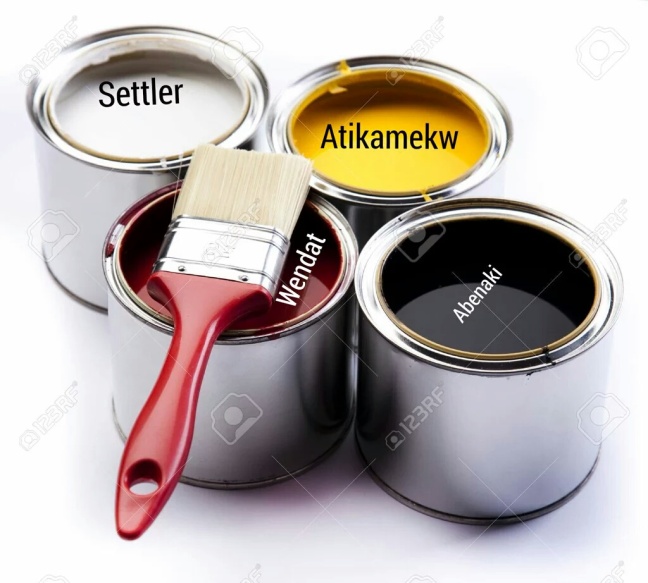
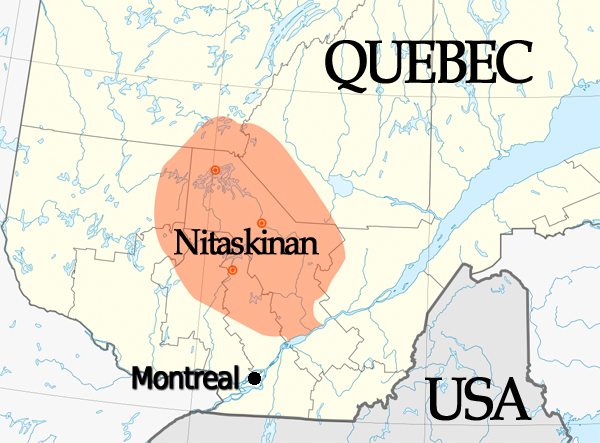
The name-place Atikameg hit me like a jolt. I have other ancestors from Atikamekw communities in Tapiskwan Sipi –  Mauricie and Lanaudière.

Niw’hk’m’kanak – All Our Relations.


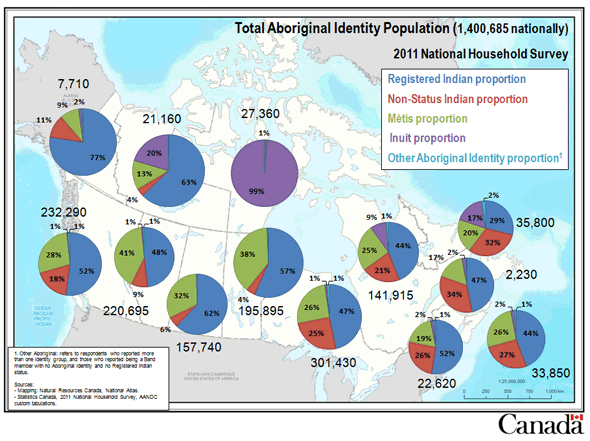
Métis, en chiffres

Combien de personnes s’identifient Métis au Canada?

Regardons les chiffres sur les Mitchifs:

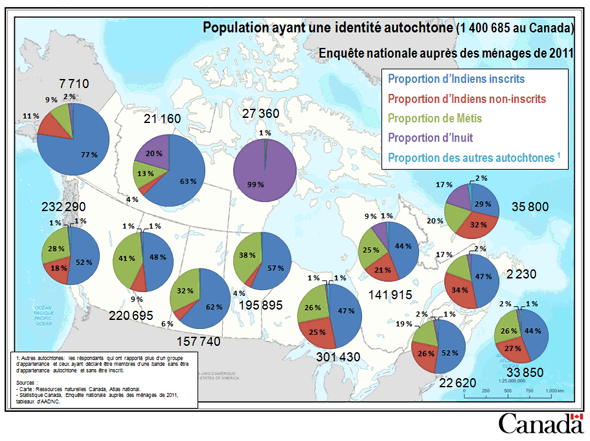
abo_demo2013_map2_1371568874511_fra

Données démographiques sur les Autochtones tirées de l’Enquête nationale auprès des ménages de 2011

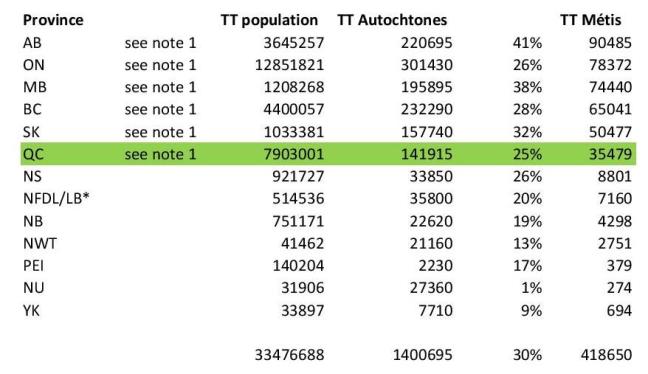
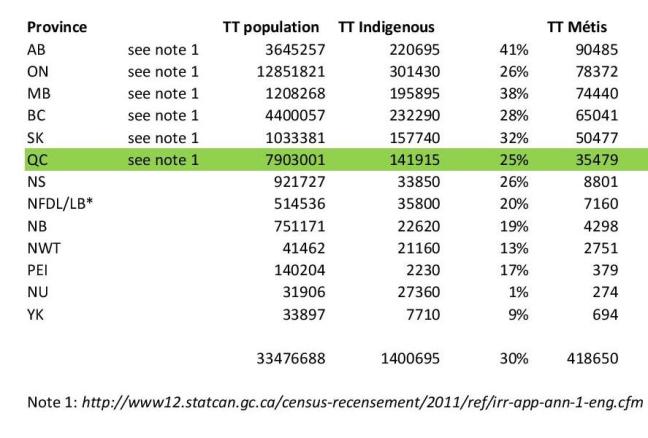
Ou habitent les gens qui s’identifient Métis?

la pop metis

Note 1: Annexe 1 : Recensement 2011 – Annexe

*Concernant le sujet des Métis du Labrador, consultez:

Les Inuit-Métis du Labrador: contexte historique (version anglaise)

NunatuKavut: notre terre ancestrale (version anglaise)

Inuit du Labrador: fierté du Nunatsiavut (version anglaise)


Métis by the Numbers

How many people identify as Métis in Canada?

Let’s look at some numbers:

abo_demo2013_map2_1371568874511_eng

Indigenous Demographics from the 2011 National Household Survey

Where do people who identify as Métis live?

Metis population

Note 1: 2011 Census – Appendix 1

* For topic of Labrador Métis, please consult

Labrador’s Inuit-Metis: the Historical Background

NunatuKavut: Our Ancient Land

Labrador Inuit: The pride of Nunatsiavut


TOUTES MES RELATIONS

Le dicton Lakota: Mitakuye Oyás’iŋ. L’expression se traduit: “tous mes parents”, “nous sommes tous liés” ou “toutes mes relations” C’est une prière pour l’unité et l’harmonie avec toutes les formes de vie:. Autres gens, les animaux, les oiseaux, les insectes, les arbres et les plantes, et même les rochers, les rivières, les montagnes et les vallées. (P.160, ISBN 0-8061-3649-9.)

Nous sommes tous liés. Toutes mes relations.

Qu’est-ce que cela signifie pour moi?

Comme l’aînée de l’aîné de l’aîné, j’ai bénéficié en connaîssant cinq de mes grands-parents – trois d’entre eux avec des connexions vérifiables avec un ancêtre des Premières Nations. Tous venant des mêmes communautés historiques de Lanaudière, au Québec. Chacun d’entre eux avec des connexions de parenté: cousins, tantes, oncles qui se sont installés dans l’Ouest. Tous avec la parenté qui étaient Voyageurs, ou encore Voyageurs eux-mêmes.

A chaque génération qui passe, à chaque aïeul qui nous quitte, le fil entre la parenté devient de plus en plus mince. A la joie des colonisateurs. A la joie du gouvernements coloniaux.

Voici quelques-uns de mes liens de parenté. Quel que soit l’ancêtre que je choisis, je peux les relier les uns aux autres, peu importe où ils se sont installée.

Voici quelques exemples: (cliquez pour voir)


Nos ancêtres qui étaient en vie lors de la pendaison de Louis Riel et qui étaient en mesure de remémorer nos liens de parenté sont maintenant disparus.

Les gouvernements colonisateur ont débuter la légifération des droits Métis:

1982: Création de la section 35 de la Loi constitutionnelle:

35. (1) Les droits ancestraux et issus de traités des peuples autochtones du Canada sont reconnus et confirmés.
(2) Dans la présente loi, «peuples autochtones du Canada» comprend les peuples du Canada Indiens, des Inuit et des Métis.
(3) Il est entendu que, au paragraphe (1) “droits issus de traités” comprend les droits existants par le biais d’accords de revendications territoriales ou peut être ainsi acquis.
(4) Nonobstant toute autre disposition de la présente loi, les droits ancestraux et issus de traités visés au paragraphe (1) sont garantis également aux personnes des deux sexes.

1993: Création du test de Powley.

Voyons voir maintenant si je peux répondre avec des preuves empiriques:

  1. s’identifier comme membre de la communauté métisse;    Oui
  2. faire partie d’une communauté métisse existante;               Lanaudière, Québec
  3. avoir des liens avec une communauté métisse historique.  Lanaudière et Mauricie

Concernant le troisième critère, pour qu’une collectivité puisse être considérée comme une « communauté historique titulaire de droits », il doit être prouvé qu’un certain nombre de personnes ayant une ascendance mixte indienne et européenne ou inuit et européenne :

  1. formaient un groupe ayant une identité collective distinctive;     Absolument
  2. vivaient ensemble dans la même région;                                          Ben oui!
  3. partageaient un mode de vie commun.                                             Sans Aucun Doute.


Cet exercice m’a permis de vérifier la preuve empirique de l’histoire orale de ma famille.Ce fût un très grand défi pour moi. Je tiens à exprimer ma gratitude au Dr Sébastien Malette, professeur de droit autochtone (droits des Métis) à l’Université Carleton à Ottawa. J’ai rencontré Sebastien par hazard, grâce à nos commentaires sur un blog intitulé: La mythologie du métissage le 11 Mars 2015.Depuis lors, Sébastien est devenu un bon ami, un mentor et un allié. Si jamais j’aurais le privilège de faire une thèse au doctorat, il serait LE Prof que je supplierais avoir comme superviseur. Merci, cher Seb.

ALL OUR RELATIONS

The Lakota saying: Mitákuye Oyás’iŋThe phrase translates in English as “all my relatives,” “we are all related,” or “all my relations.” It is a prayer of oneness and harmony with all forms of life: other people, animals, birds, insects, trees and plants, and even rocks, rivers, mountains and valleys. (p.160,  ISBN 0-8061-3649-9.)

We are all related. All my relations.

What does that mean to me?

As the eldest of the eldest of the eldest, I benefited from knowing five of my great-grandparents – three of them with verifiable connections with a First Nation ancestor. All from the same historic communities in Lanaudière, Québec. All of them with kinship connections: cousins, aunties, uncles who settled in the West. All of them with kinship to Voyageurs, or Voyageurs themselves.

As every generation passes, as more of the elders passed on, the thread between kinship becomes thinner. To the glee of Colonizers. To the glee of Settler Governments.

Here are a few kinship connections. No matter which ancestor I choose, I can link them to each other, no matter where their travels have taken them and their descendants:

Here are a few examples: (click to see)


Our ancestors who were alive during the hanging of Louis Riel and who were able to recount our kinship connections passed on.

Settler Governments were able to begin to legislate the Rights of Métis.

1982: Enter Section 35 of the Constitution Act:

35. (1) The existing aboriginal and treaty rights of the aboriginal peoples of Canada are hereby recognized and affirmed.

(2) In this Act, “aboriginal peoples of Canada” includes the Indian, Inuit and Métis peoples of Canada.

(3) For greater certainty, in subsection (1) “treaty rights” includes rights that now exist by way of land claims agreements or may be so acquired.

(4) Notwithstanding any other provision of this Act, the aboriginal and treaty rights referred to in subsection (1) are guaranteed equally to male and female persons.

1993: Enter the Powley Test.

Let’s see if I can answer it with empirical evidence:

1. The characterization of the right claimed (eg: was it hunting for food?): Not claiming anything – yet.

2. Whether the claimant is a member of a contemporary Métis community:   Yes.

3. Identification of the historic Métis community:                    Lanaudière, Québec

4. Identification of the contemporary Métis community:         Lanaudière, Québec

5. The historical time-frame of the practice:                                 17th C to present

6. Whether the practice is integral to the culture of the claimant:                Yes.

7. Whether the proposed practice is continued by the Métis community:    Yes.

8. Whether the right was extinguished:                                              No. Occurring on unceded land. 

9. Whether the right was infringed upon:                                          To be continued

10. If the right was infringed, can that infringement can be justified:     To be continued

This exercise has allowed me to verify the empirical proof of my family’s oral history. It’s a pretty big deal to me. I wish to express gratitude to Dr. Sebastien Malette, Professor of Indigenous Law (Métis Rights) at Carleton University in Ottawa. I met Sebastien on the comment board at http://apihtawikosisan.com/2015/03/the-mythology-of-metissage-settler-moves-to-innocence/#comments on March 11, 2015. He has since then become a good friend, mentor and ally. If I would ever do a PhD, he’d be the guy who I’d beg to be my Advisor. Merci, cher Seb.

Artwork Acknowledgements

I’m new to this website creation and I have tried many ways to show acknowledgements of the artwork I use on this site. I feel it is important, so I am doing it  here, as a blog post.

cropped-photogrid_14474486944951.jpg

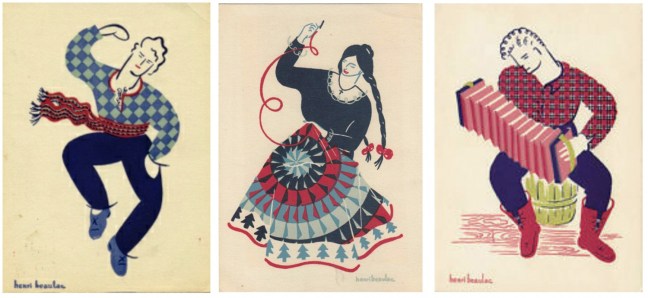
The Header is by Henri Beaulac. Born in Trois-Rivières, Mauricie, Québec in 1914, Beaulac was part of the rising of linoleum print art. These are from his series called Métis and are, in order, le gigueur, la courtepointe, et l’accordéon. I have only been able to find l’accordéon and I am actively looking to find the others to add to my collection.

Qallunette
DECOLONIZIING MY Métis identity and what it all means for me and for future generations. // Je DÉCOLONISE MON identité Métisse pour moi et pour mes descendants

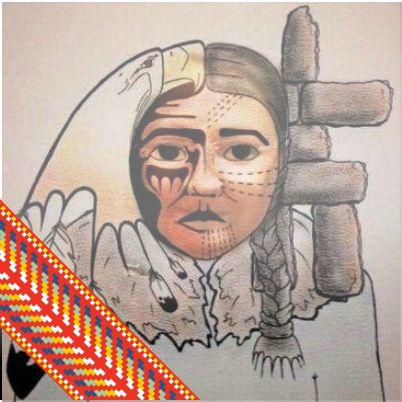
My profile picture is scanned from an original piece by Alexander Angnaluak, a young and very talented student at First Nations University of Canada in Saskatchewan. I fell in love with this piece of art and it hangs in my living room. The sash was added using a widget that was offered by – I think – the Gabriel Dumont Institute.

PLEASE ENCOURAGE INDIGENOUS ARTISTS.

Primer to negate the “Other” #Métis across Canada, especially those in #Ontario


By Prof. Sebastien Malette 

Qallunette asked Dr. Malette what would be the best primer to negate the existence of other Metis, outside Red River. Of course, Dr. Malette is known to be a advocate for the recognition of Métis multiple identities, as per case law and our histories. His answer with an ironic twist was the following :

1) Adopt and promote a highly abstract and monological nationalist narrative.

2) Instead of working toward the betterment of your immediate community, start picking on remote communities you know nothing of, for example the Great Lakes communities or as East as you can.

3) Get online and find similar individuals to bully in pack anyone who might challenge your views. Call them “white,” fakes, only-mixed, French, dangerous to First Nations, or mere opportunists. Find yourself a few champion-bloggers to do so, even better.

4) As you do this, challenge their oral traditions as lies, and claim they have no evidence to back it up. Don’t worry: this is not rude.

5) When evidence are presented, because you called for them, claim they only pertain to racial characterisations, and load this with an equally abstract notion of national “collective consciousness” they would miss anyway.

6) This is important: police people’s Indigeneity on that metaphysical basis, and look as offended as you can: anger gives you a glow of purity and a ring of authenticity. Again, call them ignorant, mislead or fraud. This will rally many bystanders, as you are obviously the victim of all this.

7) Don’t worry about hurting people in the process and endangering vulnerable communities and complex kinship network, which may have managed to survive until here. Keep telling yourself that you are saving your nation (and never explain why these communities are a real danger to the nation, just claim it).

8) Dismiss the accusations that might hurt you, like accusations of lateral violence, or the fact per evidence that even historical leaders would have condemn your views. How? Well, again, just by saying so. Or call it de-contextualisation of evidence, it often works beautifully to dismiss. Remember: the goal here is to conflate all possible ethnogenesis with one single nationalist narration, yours, don’t forget.

9) As you are getting pressed by harder questions/issues, just go more violently by using ever-refined ad hominem rhetoric. Remember: focus on attacking people, and drama. And stay angry: this gives you an extra glow of legitimacy.

10) Do all over again, moving from one alien community to the next. Until you achieve domination over the matter.

Décoloniser l’identité #Métis

Quelles sont les parties d’un part entière Métis ?

Est-ce par voies de Scrip? Traité? Constitution? Droit? Actes? Quel est le dénominateur commun de ces termes? Eh bien, ils ont tous été écrits par un gouvernement colonisateur.

Est-ce la communauté? Eh bien, les tribunaux colonialistes déterminent si une communauté «existe» vraiment, habituellement par l’entremise de jugements sur les récoltes et / ou sur des revendications territoriales.

Est-ce le quotient sanguin? Je ne sais pas. Bien qu’il pourrait fournir preuve *empirique*, l’histoire a démontré que la théorie quantique de sang n’a pas favorisé les peuples autochtones et autres minorités dans le passé. Et, il m’est offensant de penser à avoir à subir un test d’ADN aux fins de prouver mon autochtonie…

Est-ce fondé sur des événements historiques? Si oui, ces événements seront-ils choisis par consensus, par la politique, par des règles basées sur des moeurs colonialistes?

Est-ce que ça va être une concession envers une majorité qui crie le plus fort? Une minorité qui a le plus besoin d’être protégée?

Est-ce l’auto-identification? À mon avis, c’est possiblement un début. Mais ce n’est évidemment pas tout, sinon tout le monde pourrait embarquer sur le wagon Autochtone – et il ya beaucoup à déballer dans ce lourd bagage, non?

De nombreux départements universitaires étudient actuellement les questions importantes entourant la définition de qui est Métis *authentique*. La sociologie étudie les communautés métisses et tente définir une ethnogenèse. L’anthropologie regarde les fonctionnements linguistiques, socioculturelles, biologiques etarchéologiques des communautés métisses. L’histoire se concentre sur les livres et les documents, et le droit se penche sur les précédents judiciaires.

Les centres d’études Supérieures ont besoin de financement. Des bâtiments aux étudiants, la recherche exige de l’argent, du temps et de l’aide. Qui finance ces recherches? Que s’attendent-ils en retour? 

Je me pose cette question, car il est important de pouvoir ceintrer les objectifs. Je ne suis ni à l’emploi de centres d’études, de gouverment quelconque. Ma généalogie m’a été transmise par ma famille – gardée précieusement jusqu’en 2014 par mon père, et plus tôt par mon grand oncle.

En plus de ces ancêtres directs, j’ai également documenté leurs frères et sœurs quand je le pouvais, pour montrer que les communautés ont évolué à partir des noyaux familiaux. Il est intéressant de lire les actes de baptêmes et de mariages pour voir le nom des témoins qui étaient souvent des voisins, mais qui pouvaient retracer leur ascendance au même aïeul!

Je pense que la généalogie – pour moi, c’est un geste de reconnaissance de tous ceux qui sont venus avant nous (manitoweyimiwew en Cri, aanikoobijigan en Anishinaabe, iethihsothó: kon en Kanien’kéha) est un acte de décolonisation.

Les débats sont incendiaires, souvent violents – et, comme je l’ai mentionné auparavant – vraiment le reflet d’influences colonialistes.

Passons enfin à autre choses. Il y a beaucoup trop de travail à faire.

#Decolonization of #Métis Identity

What parts of a whole does a Métis make?

Is it Scrip? Treaty? Constitution? Law? Acts? What is the common thread of these terms? Well, they were all written by Settlers.

Is it Community? Well, Settler Courts have had to determine whether a community really “exists”, usually through harvesting and/or Land Claims.

Is it blood quantum? I don’t know. Although it could provide *empirical proof*, history has shown that blood quantum theory hasn’t worked in favour of Indigenous Peoples and other minorities in the past. And, well, it’s kind of offensive to me to think of having to give a dna test to prove I’m Indigenous…

Is it based on historical events? If so, will those events be selected by consensus, by politics, by Settler-based rules?

Is it going to be a concession to a majority who screams the loudest? A minority that needs to be protected?

Is it Self-Identification? I think that may be a start. But it’s obviously not everything, otherwise everybody could jump on the Indigenous wagon – and there’s a lot to unpack in that baggage bundle, right?

Many fields in Academia are presently studying the important question surrounding the definition of Who is a *real* Métis. Sociology is looking at the Social construct of Métis communities and try to define an ethnogenesis. Anthropology is looking at linguistic, sociocultural, biological, and archaeological workings of Métis communities. History is pouring over books and documents and Law is looking at precedence.

Academia needs money. From the buildings to the bodies, research demands funding, time and help. Where does the money come from? What is expected in return?

I need not, nor want any of those things. I keep it because my genealogy was given to me. It shows that many different  branches tie back to the same First Nation ancestors, showing how the community developed.

In addition to these direct ancestors, I have also documented their siblings when I could, to show that other communities evolved from close kin connections. It is interesting to read birth and marriage records to see the names of witnesses that were often neighbours that could trace their ancestry to the same First Nation ancestor!

I think that genealogy – which, to me, is the naming of those who came before us (manitoweyimiwew in Cree,

aanikoobijigan in Anishinaabe,

iethihsothó:kon in Kanien’kéha) is an act of Decolonization.

The debates are heated, often violent – and, as I have mentioned before – really reflective of the influences of Settlers.

Let’s move on. There’s lots of work to be done.